

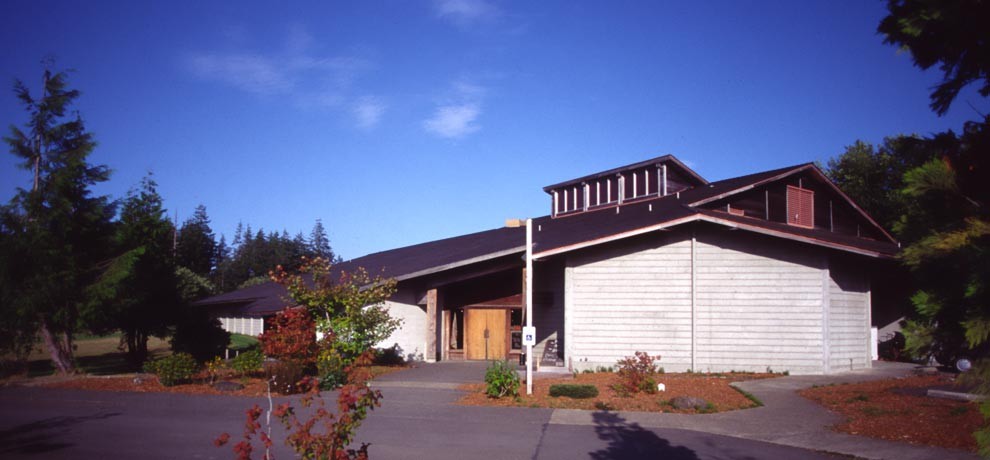

Makah Language Program
Qʷi·qʷi·diččaq — The Makah Language
Qʷi·qʷi·diččaq is the ancestral language of the Makah people and
the official language of the Makah Tribe. The Makah Language Program
works to preserve, teach, document, and restore spoken fluency in our
language for present and future generations.
The program conducts linguistic research, develops educational
materials, and teaches Qʷi·qʷi·diččaq at Neah Bay Elementary and
Neah Bay High School. An Elementary Makah Language Dictionary is
also forthcoming.
Makah Language Program Goals
- Preserve the Makah language.
- Restore the Makah language to spoken fluency.
-
Educate our children and people as scholars who can compete
anywhere in today’s world while maintaining their Tribal heritage.
About Qʷi·qʷi·diččaq
Qʷi·qʷi·diččaq, meaning “Makah language” or “speaking Makah,” belongs
to the Wakashan language family, specifically Southern Wakashan. It
is the ancestral language of the Makah Tribe in Neah Bay, Washington.
Our language is related to the languages spoken by the Ditidaht,
Pacheedaht, and Nuu-chah-nulth First Nations on the west coast of
Vancouver Island, British Columbia, Canada. As noted in the Makah
Museum’s exhibit leaflet, we are culturally and linguistically
related and continue to value and maintain these connections.
The Makah Tribal Council enacted Resolution No. 120-93, establishing
Qʷi·qʷi·diččaq as the official language of the Makah Tribe.
The Makah Language Program was officially formed in 1978. The
Qʷi·qʷi·diččaq writing system is adapted from the International
Phonetic Alphabet and North American Phonetic Alphabet spelling
systems. Its letters and symbols were agreed upon by a core group
of Makah Elder speakers.
Qʷi·qʷi·diččaq is a polysynthetic language composed of many meaningful
word parts. Sentences often begin with a predicate and may follow a
verb-subject-object sequence, although exceptions occur.
Watch: The Makah Alphabet
The chart below lists Makah letters and diacritics, their names, and
familiar English words that may help demonstrate pronunciation.
Makah Alphabet and Pronunciation Guide
Consonants
| Letter | Pronunciation |
|---|---|
| ʔ |
Glottal stop: a catch in the throat, as in the pause between the syllables of “uh-uh.” |
| c | [ts], as in “hats” or “tsunami.” |
| č | [ch], as in “chin.” |
| š | [sh], as in “shell.” |
| ɫ |
Barred-l: a lisped or “juicy” l-sound made at the side of the mouth by blowing air while the tongue is positioned to make an [l] sound. |
| ƛ |
Barred-lambda: a “juicy” [kl] or [tl] click-like sound made at the side of the mouth. |
| x |
Made by rasping air near the roof of the mouth, similar to air escaping from a tire or the Spanish sounds in “José” and “México.” |
| x̌ |
X-wedge: made by producing air friction near the back of the throat, similar to a sawing sound. |
| q |
A low k-sound made by raising the root of the tongue toward the back of the throat. |
Diacritics
| Mark | Name and use |
|---|---|
| ʷ |
Raised-w: round the lips while producing the sound that the raised-w accompanies. |
| ’ |
Glottal mark: constrict, pop, or sharpen the sound of the letter it accompanies. |
Vowels
| Type | Letter | Pronunciation example |
|---|---|---|
| Short | a | “uh,” as in “mutt.” |
| Long | a· | “ah,” as in “hot.” |
| Combined | ay | As in “Hawai‘i.” |
| Combined | aw | As in “ouch.” |
| Short | e | As in “bet.” |
| Long | e· | As in “cat.” |
| Combined | ey | As in “hey!” |
| Short | i | As in “sit.” |
| Long | i· | As in “feet.” |
| Combined | iy | As in the ending of “honey.” |
| Combined | iw | As in “few.” |
| Short | o | As in “for.” |
| Long | o· | As in “note.” |
| Combined | oy | As in “toy.” |
| Short | u | As in “look.” |
| Long | u· | As in “moon.” |
| Combined | uy | Pronounced quickly. |
Occasional Letters
Some additional sounds occur in names, songs, and Chinook Jargon:
- m and n are pronounced as in English.
- ŋ is pronounced as in “song.”
-
ḥ, or dotted-h, moves the “h” breath sound farther
back toward the throat opening.
Stress and Accented Syllables
If the vowel in the first syllable is short, stress the
second syllable. If the first-syllable vowel is long
and marked with a dot, stress the first syllable.
Examples: ʔaƛpu· — seven;
č̓i·x̌pa·ɫ — six.
Installing the Qʷi·qʷi·diččaq Keyboard
-
Visit
Languagegeek’s keyboard page
. - Locate the Wakashan language section.
- Select Qʷi·qʷi·diččaq.
- Choose the Mac or Windows download for your computer.
- Follow the installation directions included with the keyboard file.
After installation, use your computer’s keyboard or language menu to
switch between the Qʷi·qʷi·diččaq and English keyboards.
Word-Processing Settings
Automatic capitalization and correction may change Makah letters or
words. When writing in Qʷi·qʷi·diččaq, consider turning off automatic
correction and capitalization in your word-processing program.
Keyboard Layout
- ʷ — press 2
- š — press 3
- č — press 4
- ƛ — press 5
- ŋ — press 6
- x̌ — press 7
- ɫ — press 8
- ʔ — press 9
- ° — press 0
- · — press the colon key
- ’ — press the apostrophe/quotation key
Periods, commas, and exclamation marks use the same keys as they do
when typing in English. To enter other numbers or symbols, switch
temporarily to the English keyboard.
Program Funding
Funding for the Makah Language Program is provided by the
Administration for Native Americans, the Makah Cultural and Research
Center, and the Makah Tribal Council.
References
Harvey, Chris/Languagegeek. (2002–2009).
Wakashan Qʷi·qʷi·diččaq (Makah).
Languagegeek
.
Makah Language Program. Resolution No. 120-93: Makah Language,
Official Language of the Makah Tribe. Neah Bay, WA: Makah
Cultural and Research Center.
Makah Tribal Council. (1995).
Makah Cultural and Research Center: Museum Exhibit Leaflet.
Neah Bay, WA: Makah Tribal Council. Original work published in 1979.
Pascua. (2020). Makah Language Program materials.